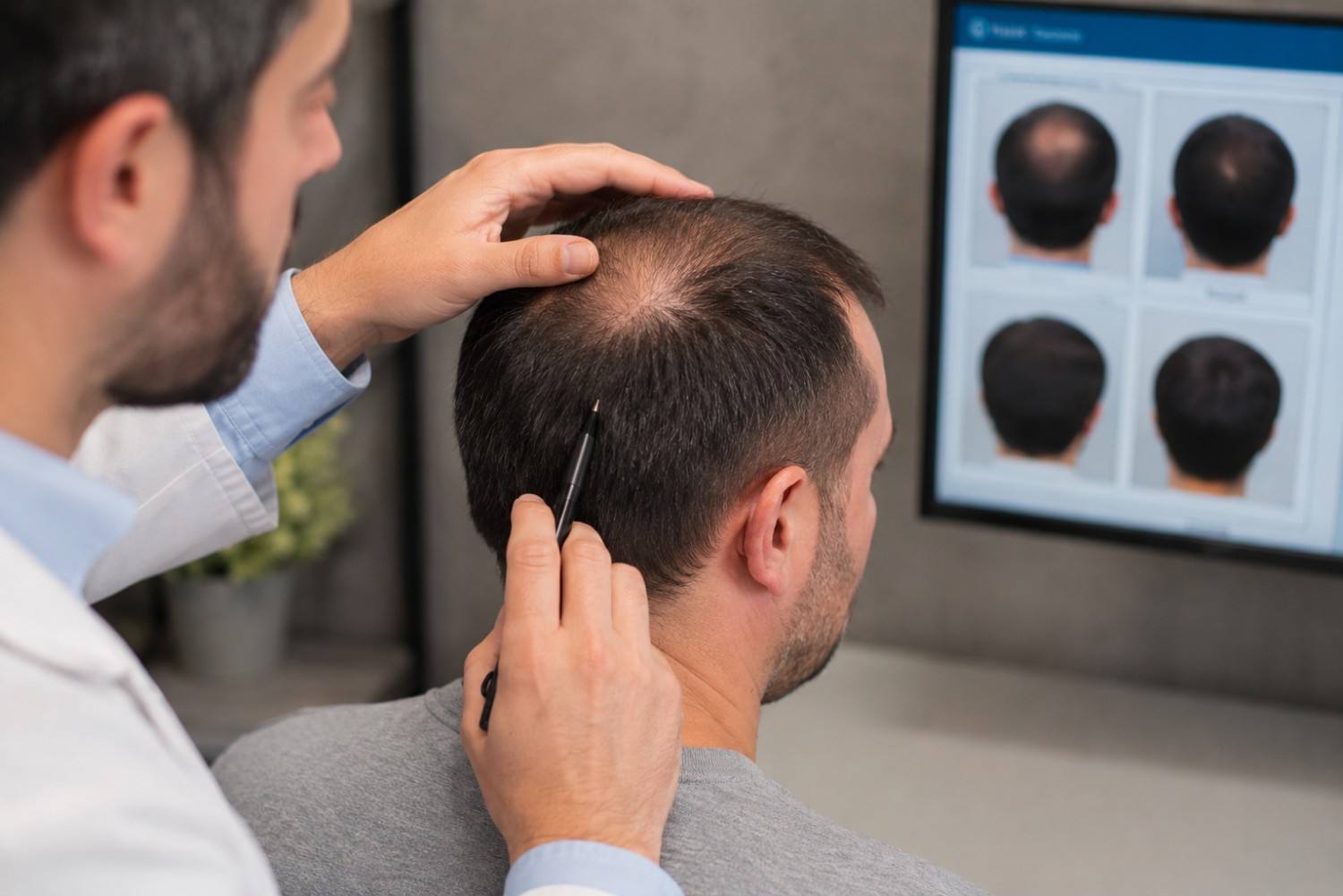
For patients seeking crown bald spot restoration, specialized care may include FUE, FUT, and regenerative treatments designed to address circular thinning, vertex hair loss, and reduced crown density.
Hair Transplant Sarasota Tampa provides personalized options for people with crown and vertex thinning. The team can assess hair loss patterns, donor hair, and individual goals to help determine a suitable restoration approach.
What Is Crown and Vertex Hair Loss?
Where Are the Crown and Vertex?
The crown is the area near the top and back of your head. The vertex is another name for this part of the scalp. Hair often grows in a circle here, which is called a hair whorl.
How Does Crown Thinning Start?
Crown thinning may start as a small area where more scalp becomes easy to see. The spot may slowly grow as more hair becomes thin. Some people may consider crown bald spot restoration when this thinning becomes more clear.
What Is Vertex Thinning?
Vertex thinning affects the hair around the top and back of the scalp. Hair may become finer and leave more space between each strand. Vertex bald spot restoration may be an option when hair loss in this area becomes more noticeable.
What Types of Thinning Can Affect This Area?
Crown and vertex hair loss can appear in several ways. The pattern may also change as hair loss moves forward.
- Crown thinning: Hair becomes thinner near the top and back of the head.
- Vertex thinning: Hair density drops around the vertex area of the scalp.
- Circular bald spots: A round area may form as more hair becomes thin or lost.
- Diffuse thinning: Hair becomes less dense across a wider part of the scalp.
- Progressive hair loss: A small thin area may slowly become larger over time.
Why Does Hair Density Change?
Hair density means how much hair grows within an area of the scalp. The crown may look less full when hairs become finer, fall out, or grow farther apart. As a result, more scalp may become visible.
Why Is the Crown Different From the Hairline?
Hair at the front of the scalp often grows in a more direct pattern. Crown hair grows around a natural center point in a swirl. This whorl makes crown care different because the natural direction of each hair can affect how full the area looks.
Why Is the Crown Different From Other Areas?
Natural Hair Whorl
Crown hair often grows in a circle around one main point. Some hairs grow forward, while others grow to the side or back. Good crown bald spot restoration should follow this natural hair pattern to help the crown look balanced and full.
Large Treatment Area
Crown hair loss can spread across a wide part of the scalp. A larger bald spot may need more grafts to create good coverage. Careful planning also helps save enough donor hair for other areas that may thin later.
Visual Density
Hair placement can change how full the crown looks. Hair direction, thickness, spacing, and the number of grafts all play a part. For this reason, crown bald spot restoration needs careful graft placement to create a natural look without using donor hair too fast.
Future Hair Loss
Hair around the crown may keep getting thin over time. A provider should plan for this possible change before placing grafts. This approach can help the treated crown blend better with nearby hair if more thinning happens later.
Who May Be a Candidate for Crown and Vertex Restoration?
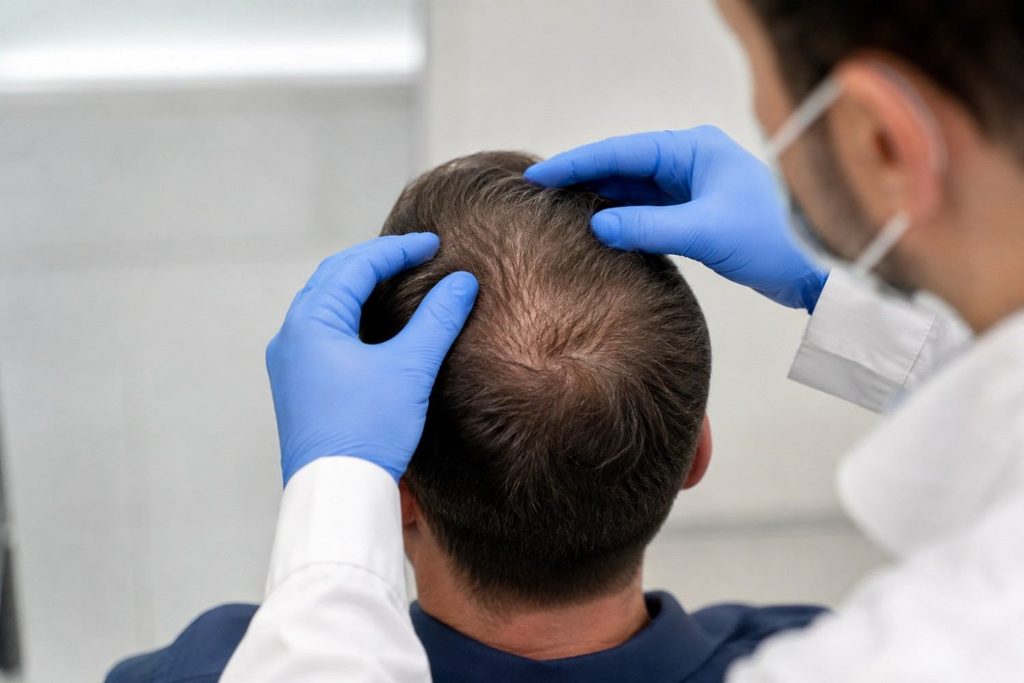
A provider should check each person before suggesting a treatment. Hair loss can differ from one person to another. A full check can help show if crown bald spot restoration may fit the person’s needs and goals.
- Hair loss pattern and stage: A provider checks where hair loss starts and how far it has spread. This helps guide the treatment plan.
- Donor hair supply: Healthy donor hair often comes from the back or sides of the head. A good supply may give the provider more options for treatment.
- Donor hair quality: Thick and healthy donor hair may provide better coverage. Hair texture and strength can also affect the plan.
- Size of the crown: A small thin spot may need a different plan than a large bald area. The size can also affect how many grafts may be needed.
- Age and future hair loss: Hair loss may keep spreading as a person gets older. A provider should consider future changes before planning vertex bald spot restoration.
- Scalp condition: A healthy scalp can be an important part of the treatment plan. A provider may check for skin problems, scars, or other concerns.
- Medical history: Health conditions and some medicines may affect treatment choices. Patients should share their health history during the first visit.
- Previous procedures: Past hair procedures may affect the donor area and available grafts. A provider can review past work before making a new plan.
- Treatment expectations: Patients should have clear and realistic goals. Results can vary based on hair loss, donor hair, and other personal factors.
Not every person with crown thinning needs the same treatment. Some people may have more donor hair or a smaller area to treat. An individual assessment can help find suitable options, but it does not mean every person will qualify for a procedure.
What Treatment Options Are Available for Crown and Vertex Bald Spots?
Follicular Unit Extraction (FUE)
FUE removes small groups of hair follicles from a donor area, often at the back or sides of the head. The provider then places these follicles in areas with thin or missing hair. An FUE hair transplant in Sarasota FL may suit people who wear short hair because FUE does not leave one long, straight donor scar. The clinic also uses WAW and Ellis FUE systems to help remove hair follicles. This method may be part of a crown bald spot restoration plan based on the patient’s needs.
Follicular Unit Transplantation (FUT)
FUT removes a thin strip of skin with healthy hair from the donor area. The provider separates the hair into small grafts and places them in the areas that need coverage. FUT may help when a patient needs a larger number of grafts, so it can be considered for vertex bald spot restoration in some cases. However, the right choice depends on the crown size, donor hair, and treatment goals.
Platelet-Rich Plasma (PRP)
PRP uses a small sample of the patient’s own blood. The provider prepares the platelet-rich part and places it into the scalp as part of a hair care plan. PRP may support a wider plan for crown bald spot restoration, but results can differ from person to person. It should not be viewed as a promise of new growth or a set result.
Scalp Micropigmentation (SMP)
Scalp Micropigmentation (SMP) places small dots of pigment on the scalp to create the look of greater hair coverage. It may help make thin areas look less clear by reducing the contrast between the hair and scalp. However, SMP does not add new hair follicles or make new hair grow.
FUE vs. FUT: Which Option May Work for the Crown?
How Do FUE and FUT Compare?
FUE and FUT both move healthy hair from a donor area to an area with hair loss. However, each method collects donor hair in a different way. A FUT hair transplant in Sarasota FL may be an option when a patient needs a larger graft session, while FUE removes follicular units one at a time.
| Factor | FUE | FUT |
| Donor harvesting | Removes follicular units one at a time | Removes a strip of donor tissue |
| Scarring | Leaves small extraction marks | Leaves a linear scar |
| Hair length | May suit shorter hairstyles | Longer hair may help cover the scar |
| Graft needs | Depends on each patient | May support larger graft sessions |
| Recovery | Recovery time can vary | Recovery time can vary |
| Suitability | Needs a personal assessment | Needs a personal assessment |
Which Method May Fit Your Needs?
Neither FUE nor FUT is the right choice for every person. A provider should check the donor hair, crown size, hair loss pattern, and goals before suggesting a method. Good crown bald spot restoration planning should also consider future hair loss so the provider can use the available donor hair with care.
Why Does Donor Hair Matter?
The amount and quality of donor hair can affect which method may work best. A large crown may need more grafts, while a smaller area may need fewer. Hair thickness and donor density can also affect how much coverage a provider may create.
Why Should Future Hair Loss Be Considered?
Hair around the crown may keep thinning after a procedure. The treatment plan should account for this possible change and save donor hair when needed. Careful planning can help the restored area blend with nearby hair as the hair loss pattern changes.
How Many Grafts May a Crown Bald Spot Need?
Does Every Crown Need the Same Number?
There is no set graft number for every crown. A small thin spot may need fewer grafts than a large bald area. Careful crown bald spot restoration planning looks at the crown, donor hair, and the amount of coverage a patient wants.
What Affects the Graft Count?
Several factors can change how many grafts a person may need. A provider should check each one before giving an estimate.
- Bald area size: A wide bald spot may need more grafts than a small thin spot.
- Existing hair: Hair that still grows in the crown may affect where new grafts go.
- Desired density: Some patients may want more visual coverage than others.
- Donor supply: The amount of healthy donor hair can limit how many grafts are available.
- Hair thickness: Thick strands may create a fuller look with fewer hairs.
- Hair texture: Curly or wavy hair may cover the scalp in a different way than straight hair.
- Hair and scalp contrast: A strong color difference can make the scalp easier to see.
- Crown pattern: The natural hair whorl can affect where and how grafts are placed.
- Past procedures: Previous work may reduce the amount of donor hair still available.
Can a Large Crown Need More Grafts?
A large bald crown often needs more grafts because there is more space to cover. The provider must also think about hair direction and the natural crown whorl. Good planning can help use donor hair with care while creating balanced coverage.
Are Large Graft Sessions Available?
Our clinic offers MEGA sessions of up to 4,000 grafts in one visit. However, this does not mean every crown needs or qualifies for 4,000 grafts. We assess the crown size, donor supply, hair loss pattern, and treatment goals before deciding how many grafts may be suitable.
Ready to Restore Your Crown?
Hair Transplant Sarasota Tampa can help you explore crown bald spot restoration based on your hair loss, donor hair, and goals. We can review your crown and explain the options that may fit your needs. Contact us to schedule a consultation and learn more about your hair restoration choices.
FAQs
1. What causes a bald spot on the crown?
Crown hair loss often happens as part of pattern hair loss. Hair may slowly become thin around the natural crown whorl, making more scalp visible over time.
2. Can a bald crown be restored?
A bald crown may be suitable for crown bald spot restoration, but each person is different. A provider should check the size of the area, donor hair, and hair loss pattern first.
3. How many grafts does a crown usually need?
There is no set number of grafts for every crown. The amount depends on the bald area size, existing hair, donor supply, hair thickness, and desired coverage.
4. Is FUE or FUT better for crown hair loss?
Both FUE and FUT may help treat crown hair loss. The right option depends on donor hair, crown size, scar choice, graft needs, and personal goals.
5. How long does crown hair take to grow?
New hair growth takes time after a procedure. Early growth may appear within several months, while fuller results can take longer. Growth speed and final results vary for each person.